


A Christmas table has to do two jobs that pull against each other. It has to look like an occasion, and it has to survive eight people eating a large meal off it for three hours. Most of the tables in magazines would not survive the gravy.
This is how to get the look without ending up with a centrepiece nobody can see over and candles nobody can light.
Decide where the money goes
You cannot upgrade everything, and you do not need to. A table reads as considered if two or three elements are deliberate and the rest is plain.
The elements worth spending on, in order: the thing at each place setting, the cutlery, and one running element down the middle. The elements not worth spending on: napkin rings, disposable table scatter, anything described as a "table runner set", and crackers, which are the single worst value item of the season.
Plain white plates on a plain cloth with good cutlery and a personal touch at each seat looks far better than a table where everything is patterned and competing.
Cutlery does more than anything else
This is the least obvious upgrade and the most effective. Everyday cutlery is fine and completely invisible; it is also the thing every guest holds for three hours and looks at from thirty centimetres.
A set of gold Christmas spoons and forks with Santa and reindeer detailing does the job for dessert and coffee without needing a whole new canteen of cutlery. That is the sensible way to do it: keep the everyday knives and forks for the main course, and bring out the festive set when the pudding arrives. It costs a fraction of a full set and it lands at the moment everybody is paying attention.

The place setting that doubles as a gift
The best trick on a Christmas table is to make the place marker something the guest takes home. It solves the seating plan, it removes the awkwardness of a small gift, and it costs less than a bought place card set.
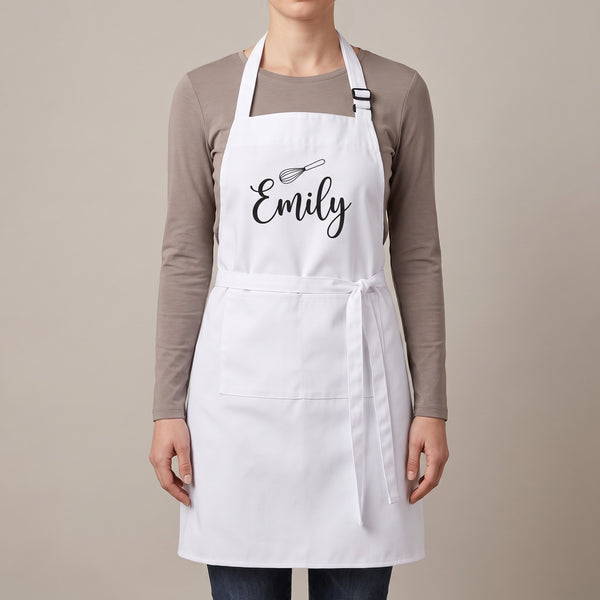
A personalised wooden coaster with a name on it works as a place marker, a coaster during the meal and a present afterwards. A personalised mini wine bottle bag at each setting does the same job at a larger scale for the adults — name on the bag, small bottle inside.
If you are hosting a big table with people who do not all know each other, this is worth doing purely for the practical reason that it starts conversation. Everybody picks up the object with their name on it and reads the ones either side.
New this year for the same job: a red cloth napkin with a name in one corner, and a clear acrylic star or a 5 cm fillable bauble with a name on it to sit on each plate. A boxed mini Christmas fork and spoon set covers pudding. For whoever is hosting, a blue check Christmas tea towel, a Christmas bottle stopper or a snowman wine bottle gift bag goes with the bottle you were bringing anyway.
The middle of the table
One rule: nothing above eye level when seated. A centrepiece that blocks the person opposite is a centrepiece that gets moved to the sideboard by the second course, which means you spent money on twenty minutes of decoration.
Low and long beats tall and central. Greenery down the middle — a length of ivy, some eucalyptus, offcuts from the tree — costs nothing and looks better than most bought arrangements. Candles either side of it rather than in the middle, and tealights rather than tapers if children are at the table.
Leave a clear channel down the centre. Dishes have to land somewhere, and a table where there is nowhere to put the potatoes is a table that gets dismantled in a hurry.
The room around the table
Half the impression of a Christmas table comes from what is behind it, and it is much cheaper to change.
Cushion covers are the highest-impact seasonal change in a room because they cover a large area for very little money and store flat for the other eleven months. A set of buffalo plaid cushion covers or the red truck and golden retriever set changes the whole feel of a sitting room next door for under a tenner.
If you are hosting a larger gathering, a custom arched acrylic sign with a menu, a welcome or the WiFi on it sits on the sideboard and answers the questions you would otherwise answer eleven times. We wrote about what to put on one in what to put on a WiFi and QR code sign.
Practical things that are always forgotten
Somewhere for the used cutlery between courses. Somewhere for the bones and the shells. Water on the table, in something that is not the wine jug. A trivet for every hot dish, decided before the dish arrives rather than while holding it.
And check the table is actually big enough with everything on it. Lay it the night before with the serving dishes in place, empty, and you will find out what does not fit while there is still time to do something about it.
Ordering in time
Personalised place settings are made to order, so they need a week or so of margin rather than a day. One to four working days to make, plus delivery, and December is the busiest post of the year. Ordering table pieces in November is the difference between having them and improvising with a marker pen.
The seasonal range is in the Christmas shop, and the wider plan is in the complete guide to personalised Christmas gifts. For the room itself, see home and living.
The short version
- Make two or three elements deliberate and leave the rest plain.
- Festive cutlery for pudding and coffee only. It is the cheapest upgrade with the biggest effect.
- Make the place marker something they take home.
- Nothing above eye level, and leave a channel for the serving dishes.
- Lay the table the night before, empty, to find out what does not fit.
Frequently asked questions
Where should the money go on a Christmas table?
On the thing at each place setting, the cutlery, and one running element down the middle. Napkin rings, disposable table scatter and crackers are the worst value of the season.
Do I need a whole festive cutlery set?
No. Keep everyday knives and forks for the main course and bring out a gold Santa-and-reindeer spoon and fork set for pudding and coffee, when everybody is paying attention.
What works as a place marker?
Something the guest takes home: a personalised wooden coaster with their name on it, or a mini wine bottle bag with a small bottle inside. It solves the seating plan and starts conversation.


