


October half-term is five days long and it rains for four of them. At some point on day two, somebody suggests doing a craft, and what happens next depends almost entirely on decisions made in the ten minutes before it starts.
This is what we have learned from making things with children and from the number of craft kits that get bought in the last week of October.
The honest attention span
Plan for less time than you think and you will be pleasantly surprised rather than exhausted.
Roughly: a four-year-old will concentrate on one making task for about ten to fifteen minutes. A seven-year-old, twenty to thirty. A ten-year-old, forty if the thing is genuinely theirs and nobody is hovering. After that, the activity is over whether or not it is finished, and pushing past it is how the afternoon turns.
Two consequences. First, choose an activity that reaches a finished object inside that window, not one that requires a second session to be worth anything. Second, if the drying time is long, plan the afternoon around the wait rather than pretending it will not happen.
Set up before you announce it
The single biggest predictor of a good craft afternoon is that everything is on the table before any child knows it is happening.
Cover the table. Put out one pot of each colour rather than the whole box. Fill a jar of water. Get the aprons on before the first thing is opened, not after the first spill. Put a bin bag or a bowl on the table for offcuts, because the alternative is offcuts on the floor.
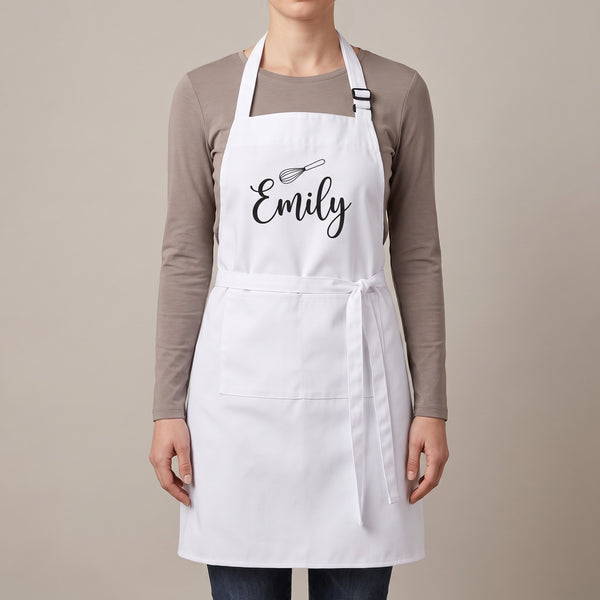
A personalised kids apron does more here than protect clothes. It signals that the activity has started, which is a surprisingly effective way of getting a child to sit down. It is also the thing they will put on unprompted next time. We wrote about sizing and fit in our kids apron guide.

Kits beat freestyle, most of the time
There is a romantic idea that children should be given raw materials and left to invent. Some children thrive on that. Most, on a wet Tuesday, look at a box of card and glue and do not know where to start, and the request for help arrives within ninety seconds.
A kit removes the blank page. Everything needed is in the box, the end result is defined, and the child's creativity goes into the decisions that matter — colour, pattern, whose name goes on it — rather than into the logistics.
The DIY personalise-your-own Christmas ornament kit is well suited to late October for an unfashionable reason: it produces something that gets kept and hung up six weeks later. A craft that reappears on the tree in December is worth ten crafts that go in the recycling on Friday.
What to make when you have no kit
Three that need almost nothing and reliably work.
Name banners. One letter per sheet, decorated however they like, strung across a bedroom door. It scales to any age, any number of children, and any attention span, because each letter is a complete unit.
Card design. Get the Christmas cards for grandparents made now, in October, while there is time and nobody is stressed. This is genuinely the best-value craft of the year.
Decorating what they own. Pencil cases, folders, notebooks. A sheet of personalised school name stickers turns tidying the school bag into an activity, and it means half the labelling for next term is done. There is a full method in school name labels that don't peel.
Pens, and why the set matters
Colour choice is where most of a child's creative decision-making actually happens, and a dried-up set of four felt tips is a limit on the whole afternoon.
A wizard-theme ten-colour gel pen set works well for this age group because the pens are small enough for a small hand and there are enough colours that nobody is fighting over the good one. Gel rather than felt tip also means less bleed-through onto the table.
For the same reason, the 4-in-1 multi-colour pen set is the one that gets fought over in a good way — four colours in one barrel is a novelty that holds attention past the ten-minute mark.

How to finish well
The end of a craft session is handled badly more often than the start.
Decide in advance where the finished thing goes and say it out loud at the beginning — on the fridge, in the window, posted to Granny. A craft with a destination is taken more seriously than one that ends on the draining board.
Photograph everything before it degrades, because most of it will. And accept that tidying up is part of the activity and takes about a quarter of the total time. Building it into the plan is the difference between a nice afternoon and a nice afternoon followed by an argument.
If it is a gift rather than an afternoon
Craft kits and pen sets are among the better presents for this age group precisely because they are an activity rather than an object. A kit plus a named apron is a complete gift for a five- to nine-year-old and comes to less than twenty pounds.
Everything is printed to order in Cheshire, dispatched in one to four working days with free UK delivery. More in gifts under £10 and the new arrivals collection.
The short version
- Plan for ten to thirty minutes of real concentration, depending on age.
- Set the whole table up before anybody knows it is happening.
- Aprons on first. They protect clothes and they start the activity.
- Kits beat a blank page on a wet Tuesday.
- Say where the finished thing is going before you start.
Frequently asked questions
How long will a child concentrate on a craft?
Roughly 10 to 15 minutes at four, 20 to 30 at seven, and about 40 at ten if the project is genuinely theirs and nobody is hovering. Choose something that reaches a finished object inside that window.
How do I set up a craft afternoon so it works?
Have everything on the table before any child knows it is happening: cover the table, put out one pot of each colour, fill a jar of water, add a bowl for offcuts, and get the aprons on before anything is opened.
Kit or freestyle?
A kit, most of the time. It removes the blank page, so the child's creativity goes into colour, pattern and whose name goes on it. The personalise-your-own ornament kit produces something that gets hung up six weeks later.


