

A lunch bag has one job: get food from your kitchen at eight in the morning to a child at half past twelve, still cold. Most of them do it badly, and most of the reason is not the bag.
Here is what actually keeps a packed lunch cold through a school morning, and where the usual advice goes wrong.
Four and a half hours is the window
The Food Standards Agency's guidance for chilled food is to keep it at 8°C or below. A packed lunch leaves the fridge at around 4°C and starts warming immediately. An insulated bag does not refrigerate anything — it only slows down how fast the contents catch up with the room.
That distinction matters. An insulated bag on its own, in a warm cloakroom, buys you an hour or two. An insulated bag with something frozen in it buys you the whole morning. The bag is the flask; the ice pack is the cold.
So if you take one thing from this: the bag is not the cooling. Put something frozen in it.
Where the ice pack goes
Cold air sinks. An ice pack sitting at the bottom of the bag cools the bottom of the bag.
Put it on top of the food, or down the side against the item you most want to stay cold — the yoghurt, the cheese, the ham sandwich. If you have two small packs, one flat on top and one down the side works better than one large one anywhere.
A frozen drink carton or a half-frozen water bottle does the same job and gets drunk, which is one less thing to lose. Freeze it standing up and only about two-thirds full so it has room to expand.
What not to send in warm weather
Not everything is worth the risk in a September heatwave or a June sports day.
- Fine in almost any conditions: hard cheese, crisps, dried fruit, whole fruit, bread and jam, plain biscuits.
- Fine with a frozen pack: ham and chicken sandwiches, yoghurt, soft cheese, hummus, pasta salad, boiled eggs.
- Think twice on a hot day: anything with mayonnaise, prawns, rice that has been cooked the day before, and soft cheese that has already been out of the fridge that morning.
The other rule that saves more lunches than any of this: chill it overnight. A sandwich made the night before and left in the fridge starts the day at fridge temperature. A sandwich made at 7:45 from room-temperature ingredients starts warm and never recovers, whatever bag you put it in.
Choosing the bag itself
Three things are worth checking, and none of them is the picture on the front.
A lining you can wipe. Fabric linings absorb spilled yoghurt and stay absorbed. A wipe-clean insulated lining can be dealt with in ten seconds at the sink, which means it actually gets done.
A zip that a child can open one-handed. Lunch is often eaten standing up, in a queue, holding something else. A stiff zip or a fiddly clasp gets a child asking an adult for help every day.
A shape that fits what you actually pack. Measure your usual sandwich box before buying. A bag that will only take the box diagonally is a bag that gets packed badly.
Our personalised kids lunch bag is an insulated cooler bag in navy with a large white printable panel on the front. Navy for the body is a deliberate choice — it is the colour that does not show a week of playground floor. An ice pack is not included, so add one to your first order elsewhere if you do not already have a couple in the freezer.
The name on the front
Lunch bags get mixed up more than almost anything else a child carries, because thirty of them sit in one crate and they all look similar from above.
An iron-on label or a name sticker handles a term at best. On ours the design is printed into the panel rather than sitting on top of it, so there is no edge to catch and lift when the bag is dragged out of a crate by the handle every day.
Choose a design your child will recognise from across a room before they can read it well — space, dinosaurs, rainbows, football, florals, or send us your own idea. For a reception-age child the picture does more work than the name does. By Year 3 it is the other way round.
Print the name they answer to rather than the one on the register, for the same reason as on a school water bottle: the person reuniting a bag with its owner is usually another child.
Cleaning it, honestly
Wipe the inside out on Friday. That is the whole routine, and it is the one most likely to be skipped.
What goes wrong is not dirt, it is damp. A bag zipped shut on Friday afternoon with a bit of spilled drink in the bottom is a bag that smells on Monday. Leave it open over the weekend and most of the problem never starts.
If something has leaked properly, take everything out, wipe the lining with warm soapy water, rinse the cloth and go over it again, then leave it open somewhere airy until it is completely dry. Do not put an insulated bag in the washing machine — the insulation layer is not made to be tumbled and it will not go back the same shape.
Making it a set
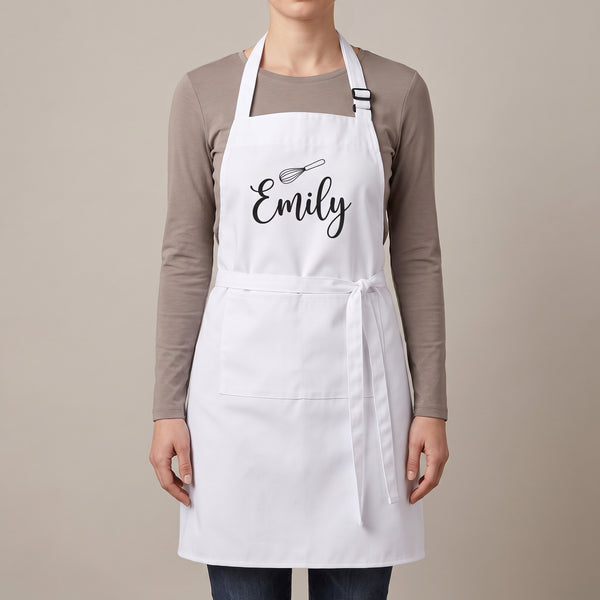
If you are buying for the first day of term anyway, the same name and font can go on the 600 ml insulated water bottle and the kids apron for cooking at home. Ordering them together is also simpler than remembering the font you chose in three weeks' time.
Everything is printed to order in Cheshire and usually dispatched within one to three working days, with free UK delivery. Late August is our busiest fortnight, so leave a week before term starts rather than a weekend.
The short version
- The bag slows warming; the frozen pack does the cooling. Always send one.
- Ice pack on top or down the side, not underneath.
- Make and chill the lunch the night before.
- Wipe-clean lining, a zip a child can work, and a shape that fits your sandwich box.
- A printed name that is part of the panel, not stuck on it.
- Leave it open over the weekend.
Related guides: the bag itself is measured and washed in personalised kids lunch bag: what fits and how it washes. For what goes inside, what to pack in a school lunch box that still looks like food at noon covers the food side. If the lunch needs to be hot rather than cold, the insulated food jar guide explains preheating and portions.
Frequently asked questions
How long does an insulated lunch bag keep food cold?
On its own, in a warm cloakroom, an hour or two. With a frozen ice pack or a frozen drink carton inside, the whole morning: the bag only slows the warming, the ice pack does the cooling.
Where should the ice pack go in a lunch bag?
On top of the food, or down the side against the item you most want to stay cold. Cold air sinks, so a pack at the bottom only cools the bottom of the bag.
Is an ice pack included with the personalised lunch bag?
No. The bag is an insulated cooler bag in navy with a wipe-clean lining and a white printable front panel; add an ice pack to your first order.
Related reading: choosing a water bottle that survives a school term.


