

There is a point every autumn, usually the week the clocks change, when a cold sandwich in a cold hall stops being lunch and starts being a chore. The box comes home half full and nobody can explain why.
A hot lunch fixes it, and it is much less effort than it sounds — but only if the flask is used properly. Most disappointing food flasks are not bad flasks. They are good flasks used cold.
The one step that decides everything
A vacuum flask does not heat food. It slows down the loss of whatever temperature is already inside it. So if you put hot food into a room-temperature flask, the flask steals a large part of that heat in the first ten minutes, and by lunchtime the food is lukewarm.
Preheating solves it, and it takes five minutes of standing around rather than five minutes of work.
- Fill the flask to the top with boiling water and put the lid on.
- Leave it while you heat the food.
- Tip the water out just before filling.
- Fill it to within about a centimetre of the top and close it immediately.
Two details that matter as much as the preheat. The food must be properly hot going in — steaming, not warm, because nothing gets hotter after the lid goes on. And a full flask holds heat far better than a half-full one, because the empty space is full of air that has to be heated too. If you are sending a smaller portion, send it in a smaller flask rather than half-filling a big one.
What holds temperature and what does not
Excellent: soup, stew, chilli, curry, bolognese, macaroni cheese, baked beans, porridge, anything with liquid in it. Liquid carries heat and holds it.
Good: pasta with sauce, rice dishes, sausages in gravy, cottage pie, noodles. Dense and moist, which is what you want.
Poor: anything crisp. Chips, roast potatoes, breaded chicken, pastry. Four hours in a sealed flask turns crisp into steamed, and steamed chips are a genuinely upsetting thing to open at lunchtime.
Avoid entirely: anything you would not eat if it sat on the side for four hours at serving temperature. A flask keeps food hot; it does not make risky food safe.
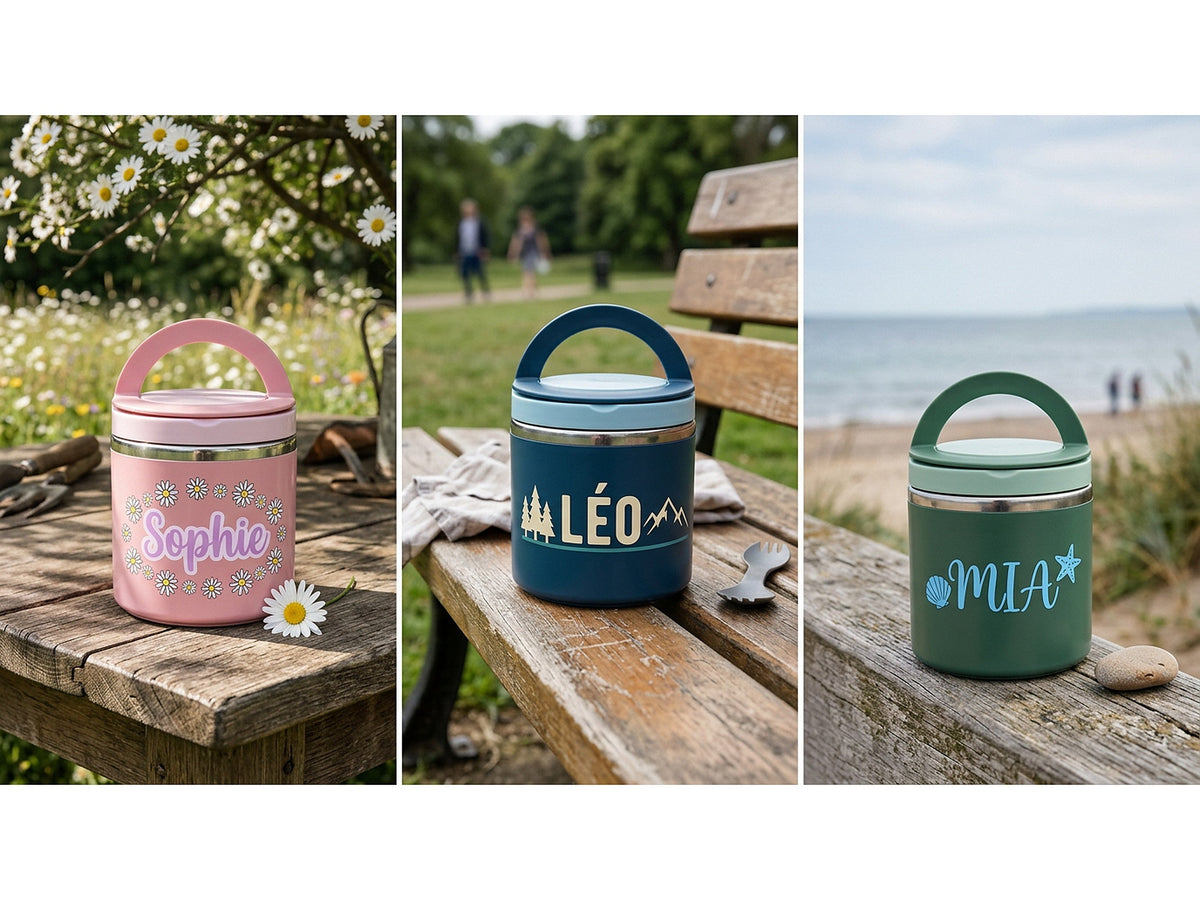
Our personalised insulated food jar is 630 ml stainless steel, which is a meal rather than a snack pot, and it has a wide mouth so a spoon actually reaches the bottom. The narrow-necked flasks are the ones that come home with food still in the base.

The morning routine, honestly
Eight minutes, most of it waiting.
Kettle on. Flask filled with boiling water, lid on. Last night's dinner into a pan or the microwave until it is properly steaming — hotter than you would serve it. Water out of the flask, food in, lid on straight away. Done.
The version that saves the most time is cooking with lunch in mind: make enough bolognese, chilli or soup for one extra portion at dinner, and the morning job becomes reheating rather than cooking. A batch of soup on a Sunday covers three lunches.
What goes alongside
A flask on its own is not a lunch box. It replaces the anchor — the sandwich — and everything else still applies.
Send something crunchy that the flask cannot provide: breadsticks, carrot sticks, crackers, a bread roll for the soup. Send fruit. Send the small good thing. There is a fuller layout in what to pack in a school lunch box.
A personalised bento lunch box works well beside a flask because the compartments handle the dry side of the lunch, and a personalised kids lunch bag is wide enough to take a flask standing upright, which is how it should travel. On the temperature side, our piece on packing a lunch bag that stays cold covers the other half of the problem.
Do not pack a hot flask against a cold item. They will fight each other and both lose. If the drink is frozen, keep it at the other end of the bag.
Can they open it?
This decides whether the whole idea works. A vacuum seal grips hard when the contents cool slightly, and a six-year-old in a noisy hall has one attempt before giving up and eating the breadsticks.
Test it at the kitchen table before the first day, with hot food inside rather than empty. Loosen the lid a quarter turn as you hand the bag over if you are unsure. And teach them the trick of holding the flask against the body and turning the lid rather than turning the flask, which is how small hands get more force.
Cleaning, and the reason flasks get thrown away
Almost no flask is binned because it stopped working. It is binned because it smells of chilli.
Empty it the day it comes home rather than the next morning. Wash the lid seal separately — it usually pulls out, and that is where the smell lives. Dry it with the lid off. Once a week, a spoonful of bicarbonate of soda in warm water left overnight resets it.
Never put a vacuum flask in the dishwasher unless it says you can. Dishwasher heat is what kills the vacuum seal on cheap ones, and a flask with a failed vacuum is a heavy cup.
Naming it
A flask is the most expensive thing in a lunch bag, which makes it the one you least want to lose. On ours the name is printed into the surface rather than stuck over it, so there is no label edge to lift after a term of washing. For everything else in the bag, school name stickers do the job, and the full method is in school name labels that don't peel.
Printed to order in Cheshire, one to three working days, free UK delivery. The rest of the school range is in new arrivals.
The short version
- Preheat with boiling water for five minutes. This is the whole trick.
- Food goes in steaming, and the flask goes in full.
- Wet and dense holds heat. Crisp does not — it arrives steamed.
- Send something crunchy alongside; a flask is the anchor, not the lunch.
- Check they can open it themselves before day one, and wash the lid seal separately.
Frequently asked questions
How do I keep a food flask hot until lunchtime?
Preheat it: fill it to the top with boiling water and put the lid on while you heat the food, tip the water out just before filling, fill to within a centimetre of the top and close it immediately. The food must go in steaming hot.
Which foods stay hot best in a flask?
Anything with liquid in it: soup, stew, chilli, curry, bolognese, macaroni cheese, baked beans, porridge. Pasta and rice dishes are good. Anything crisp, such as chips, pastry or breaded chicken, turns steamed.
What size food flask suits a school lunch?
630 ml is a meal rather than a snack pot, and a wide mouth matters so a spoon reaches the bottom. A full flask holds heat far better than a half-full one, so match the flask to the portion.


