

A packed lunch is not a meal. It is a meal that has to survive four hours in a warm bag, being carried by someone who swings the bag, and then be eaten in fifteen minutes by a child who would rather be outside.
Most packed-lunch advice is about nutrition. This is about engineering: what actually arrives intact, and what comes home untouched because it looked wrong by the time the lid came off.
The four-hour test
Before anything goes in the box, ask one question: what will this look like at midday?
Some foods fail this badly and predictably. Sliced apple browns. Cucumber weeps and wets the bread next to it. Crisps crush under a water bottle. Anything dressed goes soggy from the inside out. Bananas bruise, and a bruised banana in a small box makes everything smell like banana.
Foods that pass without any help: whole fruit with a skin, hard cheese, breadsticks, dried fruit, cold cooked pasta, chicken, boiled eggs in the shell, wraps rolled tight. Foods that pass with a bit of thought: sandwiches with the wet ingredient in the middle rather than against the bread, salad with the dressing sent separately, and anything cut at the last minute rather than the night before.
Compartments do most of the work
The single biggest improvement to a packed lunch is not what you put in it, it is stopping the contents touching each other.
A single-chamber box means the grapes roll onto the sandwich and the sandwich takes on the flavour of whatever is next to it. A compartment box keeps wet things away from dry things without a stack of little tubs and cling film. It also solves the visual problem: five things in five spaces look like a lunch, whereas the same five things in a heap look like leftovers.
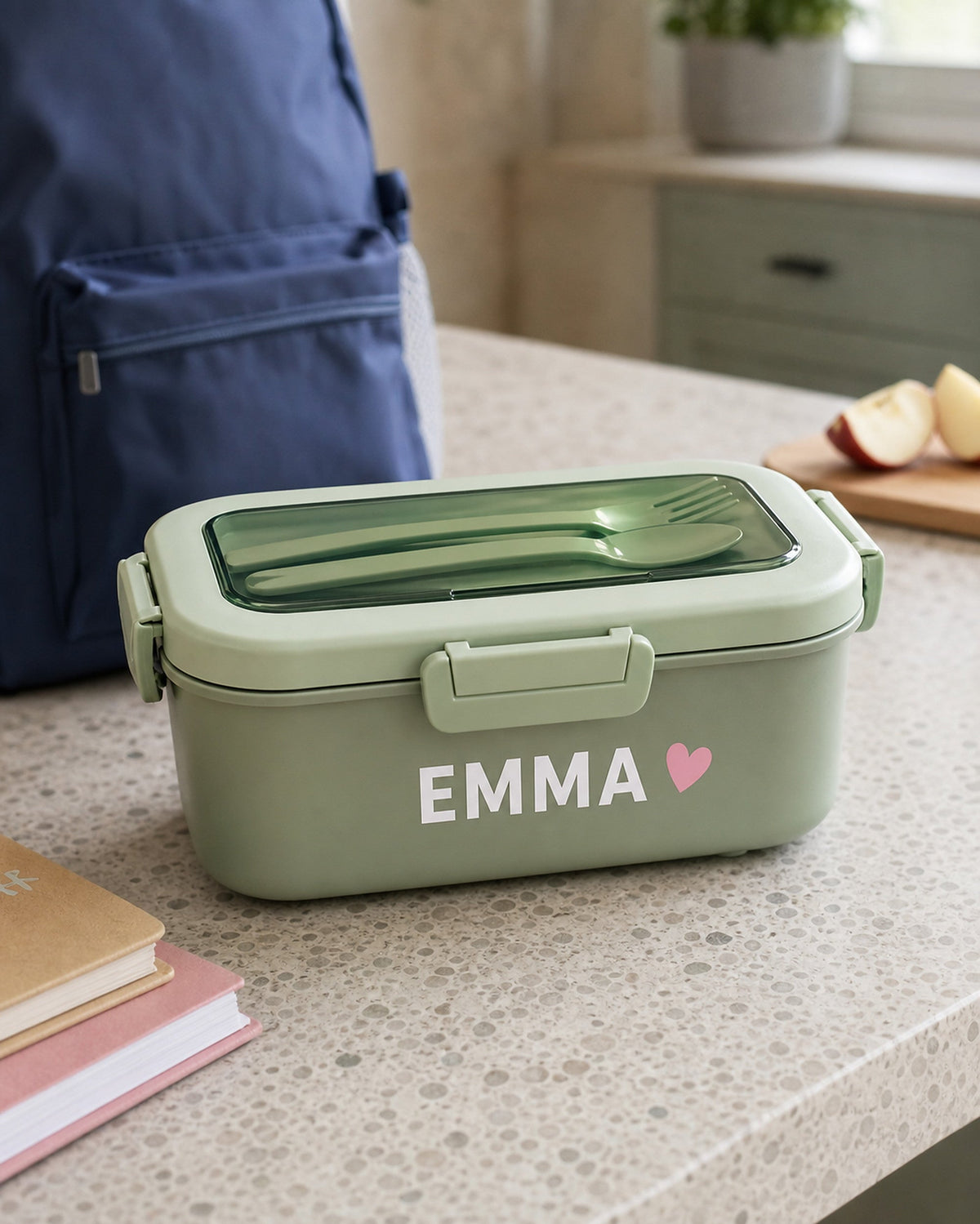
Our personalised bento lunch box is a 1400 ml four-compartment box with cutlery that clips into the lid, which removes the other classic failure — the fork that stays at home.

A layout that works
Fill compartments by job rather than by food group, and the box packs itself in three minutes.
The big one: the anchor. A sandwich, a wrap, a pasta pot, a couple of slices of pizza. This is the part that has to fill them up.
The second: something crunchy. Carrot batons, cucumber sticks, peppers, breadsticks, crackers. Crunch is what makes a lunch box feel worth opening.
The third: fruit. Whole where possible. If it must be cut, cut it that morning and squeeze a little lemon over apple or pear.
The fourth: the small good thing. A flapjack, two squares of chocolate, a yoghurt-coated something. Small, deliberate, and non-negotiable — a lunch with nothing to look forward to gets traded away.
Two habits worth adopting: pack the heaviest item at the bottom, and never fill a compartment to the brim, because a full box has nowhere to absorb a knock.
When a sandwich is not the answer
By late October, a cold sandwich in a cold hall stops appealing. This is the point in the year when a hot lunch changes a child's relationship with lunchtime entirely.
A personalised insulated food jar takes soup, pasta, chilli, curry, macaroni cheese, or last night's dinner. The technique is the whole thing: preheat the empty flask with boiling water for five minutes, tip that out, then fill it with food that is properly steaming rather than warm, right to the top. A flask does not heat food, it only slows down what is already inside it, so a cold flask and lukewarm food guarantee a disappointing lunch. The 630 ml size is a meal rather than a snack.
What holds temperature: anything wet and dense — soup, stew, bolognese, macaroni cheese, porridge. What does not: anything crisp, which arrives steamed.
Keeping it cold enough
An insulated bag with something frozen in it is not a luxury in September, when classrooms and cloakrooms are still warm.
The trick that costs nothing: freeze the drink. A frozen water bottle packed alongside the food keeps the box cold all morning and is drinkable by lunchtime. It works better than an ice pack because it does its job and then becomes the drink.
Our personalised kids lunch bag is insulated and wipe-clean inside, which matters more than it sounds — a bag you cannot wipe out becomes a bag that smells. We went into the cold-chain detail in packing a school lunch bag that stays cold, and into bottles specifically in what actually survives a term.

The bit nobody mentions: it has to be openable
A lunch box that a five-year-old cannot open in a noisy hall is a lunch box that comes home full, and nobody finds out why for a fortnight.
Test the clips at the kitchen table before term starts and let them do it themselves, twice. The same goes for a flask lid, a yoghurt pot, and the wrapper on anything you have packed. If it needs an adult, it needs replacing or opening halfway at home.
Getting it named
Every box in a class of thirty looks the same from above, and the ones that come home are the ones with a name that still reads in July. On ours the name is printed into the surface rather than stuck on top, so there is no label edge to catch. Everything else — pencil cases, folders, PE bags — is better handled with school name stickers, and there is a full method in school name labels that don't peel.
All of it is printed to order in Cheshire, dispatched in one to four working days with free UK delivery. The full school range sits in new arrivals.
The short version
- Ask what it will look like at noon, not what it looks like at eight.
- Compartments beat recipes. Anchor, crunch, fruit, one small good thing.
- Freeze the drink and it doubles as the ice pack.
- From half term, a hot food jar beats a cold sandwich — but only if you preheat it.
- Check they can open everything themselves before the first day.
Frequently asked questions
What foods survive four hours in a lunch box?
Whole fruit with a skin, hard cheese, breadsticks, dried fruit, cold cooked pasta, chicken, boiled eggs in the shell and tightly rolled wraps. Sliced apple, cucumber next to bread and anything pre-dressed fail.
Do compartments really make a difference?
Yes. Stopping foods touching each other is the biggest single improvement: grapes stay off the sandwich, wet stays away from dry, and five things in five spaces look like a lunch rather than leftovers.
How should I lay out a bento box?
Fill by job: the big compartment for the anchor (a sandwich, wrap or pasta), one for something crunchy, one for fruit, and the small one for the treat.


